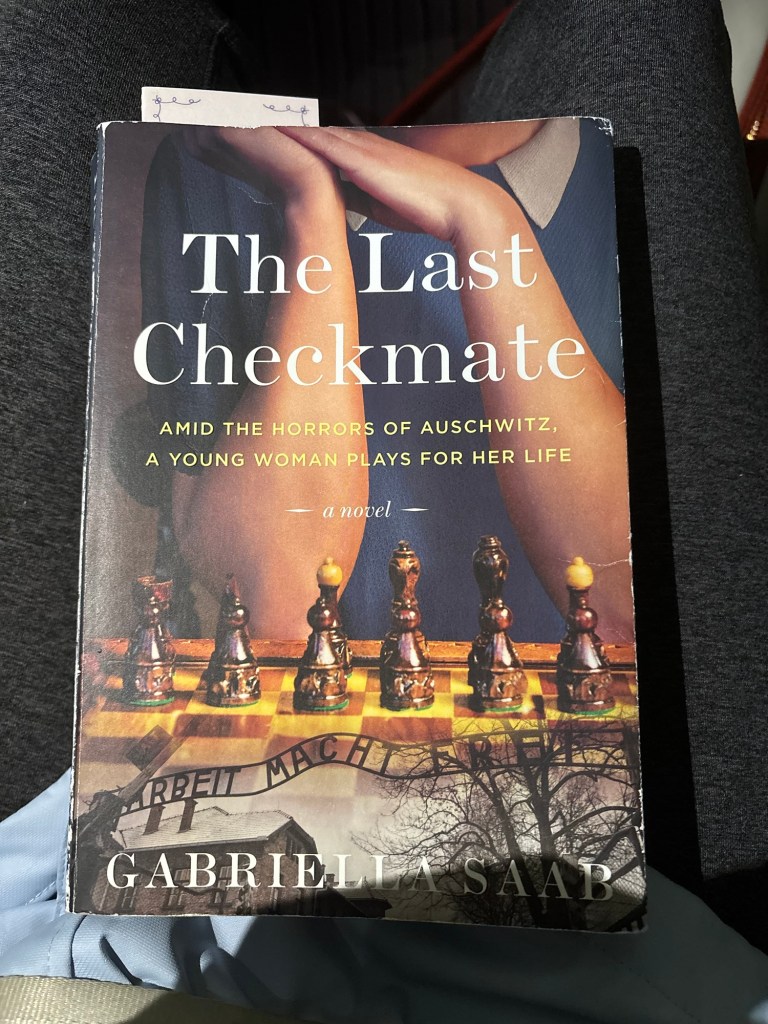
In Gabriella Saab’s debut novel, Maria Florkowska, a young woman working for the Polish resistance effort alongside her parents during World War II, has her world turned upside down when she’s sent to Auschwitz.
If the cover and the title haven’t given it away already, this book is about chess. The cover is reminiscent of The Queen’s Gambit, but that’s essentially where the similarities between the two novels end. While The Queen’s Gambit spends who knows how many pages describing the protagonist’s games with chess notation so dense the reader may be tempted to skip over it, stakes are a lot higher in The Last Checkmate. Maria’s life literally depends on chess.
Despite being forced to play against her will every day, she never loses her love for the game. But it’s not just chess that keeps Maria alive. The friends she’s made in Auschwitz give her even more reason to live, fight, and survive.
And that’s what Saab does so beautifully. The relationships between the characters in this novel are so wholesome that, aside from the powerful, uncomfortable imagery of what happened to people in Auschwitz, the reader almost forgets that everyone is skeletally thin and being overworked in a concentration camp.
This wouldn’t be a historical fiction novel if the author didn’t bring receipts. And Gabriella Saab brought receipts, indeed. She actually went to Auschwitz in order to research the book, and devotes quite a few pages after the end of the story to distilling all the history —as well as where she took creative license — into paragraphs that readers can understand. It makes the story of Maria and her friends that much richer.
 The Reviewing Fangirl
Leave a reply to Intermezzo – The Reviewing Fangirl Cancel reply